

InkTense Blocks
Have you tried InkTense pencils and blocks yet? They’re water soluble ink in either pencil or block form and I’ve been seeing them on all sorts of quilts. I got a chance to play with the blocks recently and they were a ton of fun.
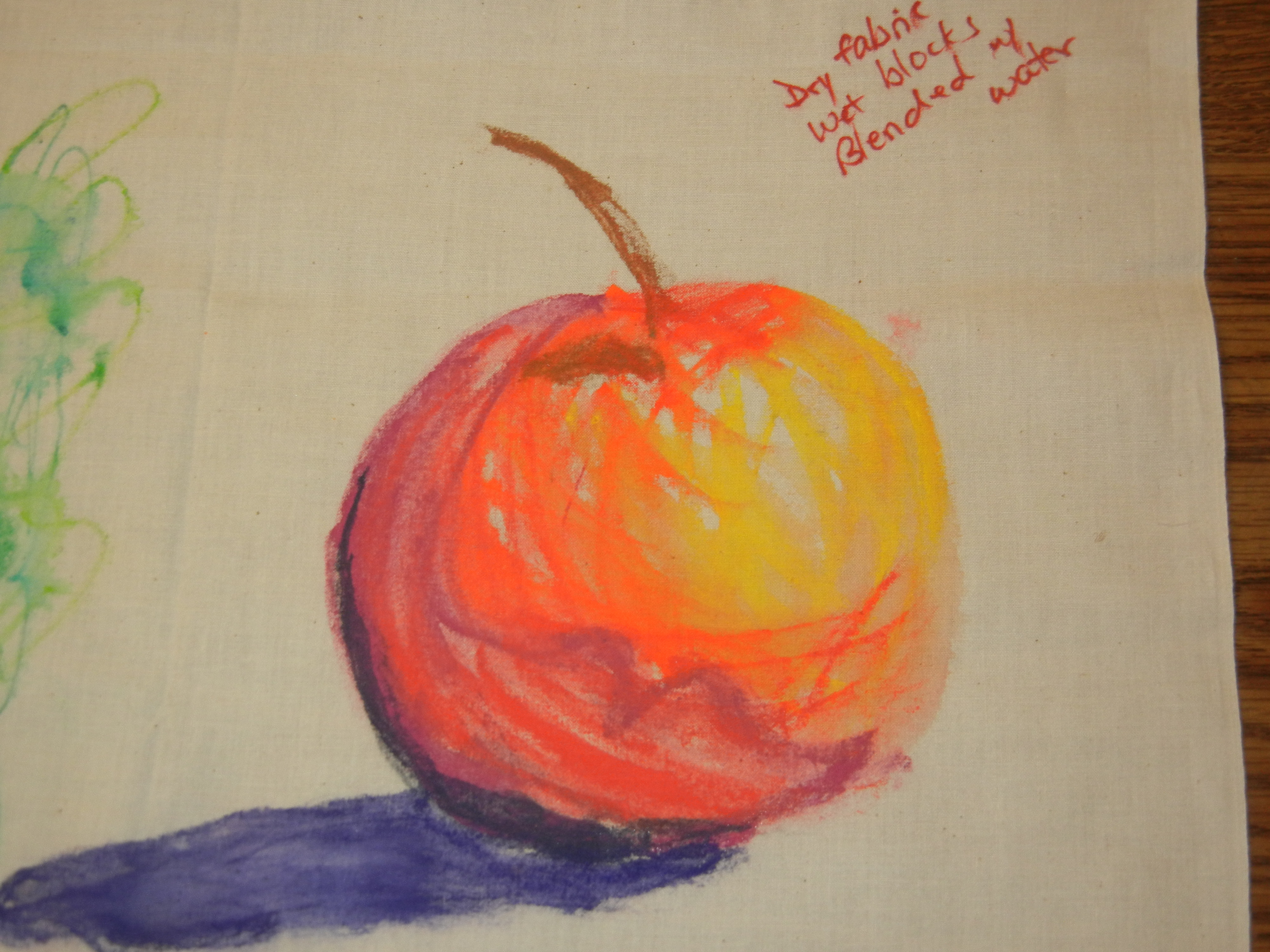
My first experiment was to test their “smear-ability,” or how much they’d bleed. I sprayed the top 2/3 of my fabric with water and used Aloe Vera gel to moisten the bottom 1/3. Then I drew over both parts with the end of the blocks, as well as with the blocks laying flat for lots of coverage.
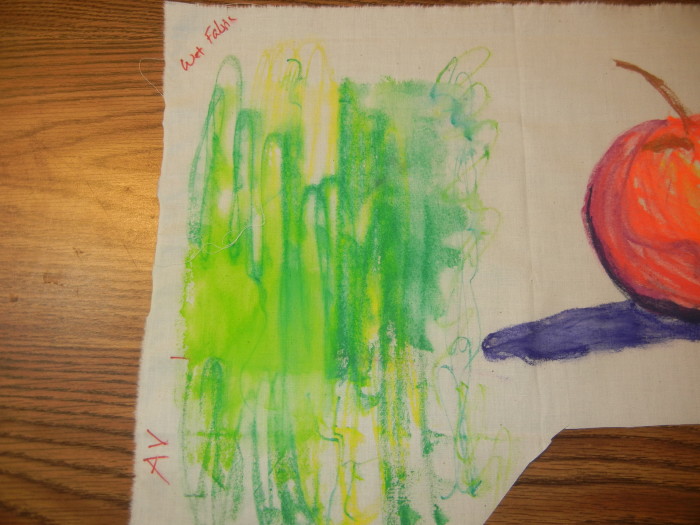
As you can see, the water areas bled pretty well and the Aloe Vera part did not. Good to know. Now, I can select the best one based on the desired results.
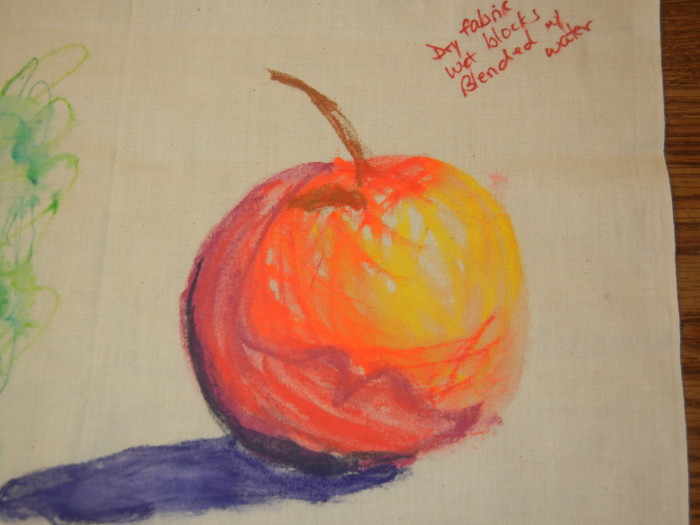
Next, I dipped the end of a block into water and drew on dry fabric. The amount of saturated color that comes from these blocks is amazing! As soon as my mark looked dry, I’d wet the end again and continue. The end just sort of melted into wonderful ink. It was very cool, and this was the result.
Finally, I tried blending colors directly onto wet fabric. Hmm, that was much less controllable. It bled more than I wanted, so then I decided to encourage bleeding by adding more water. Yep, it bled alright. Finally, I drew a design on, trying to control what I had. Not too successful, I’m afraid. But, that’s why I was experimenting.
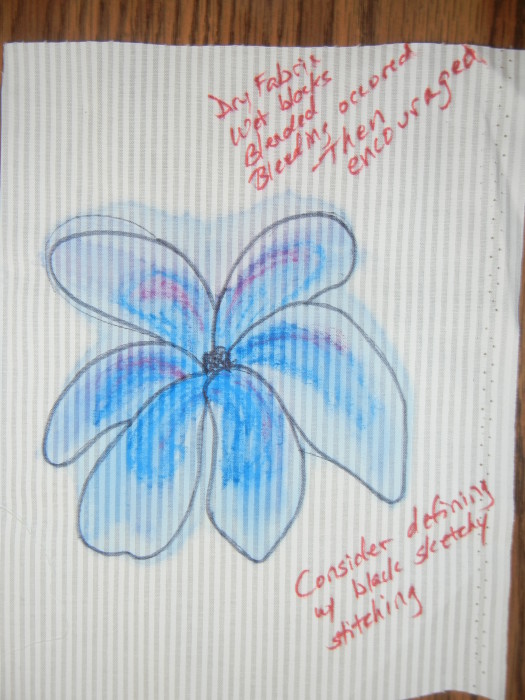
When I’m on the ball I remember to write notes about my techniques directly onto my samples.
I’ve heard a lot about the InkTense inks being permanent once dried. So, I added the step of heat setting these samples and set out to see if all of this was true. It turns out: not so much. Here’s the cotton swab after rubbing it over my dry sample – in the area where water was used.
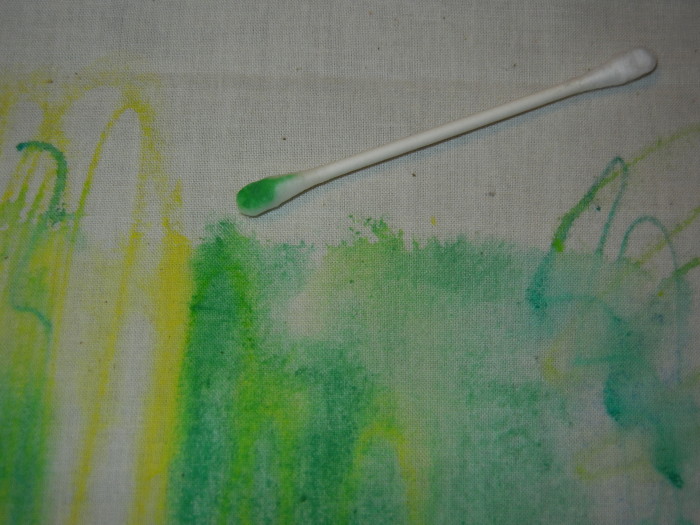
It seems like a lot of color, but maybe it wouldn’t be enough to transfer. So I tried it. It’s subtle, but it did transfer. (This actually shows up more in person.)
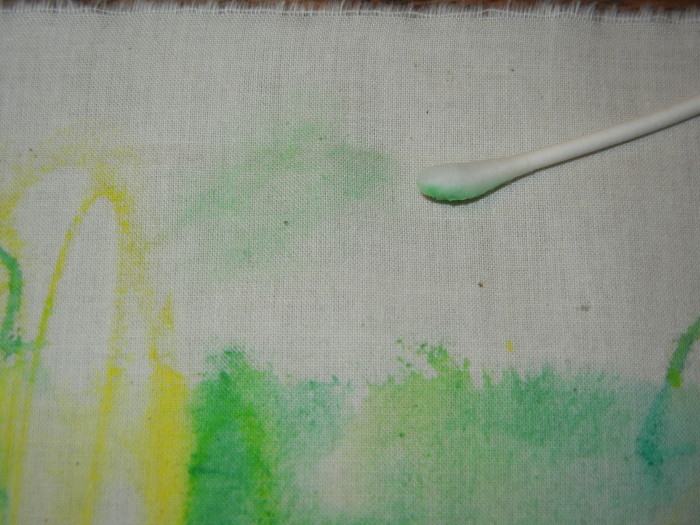
So, what about the area with the aloe vera? What would that do?
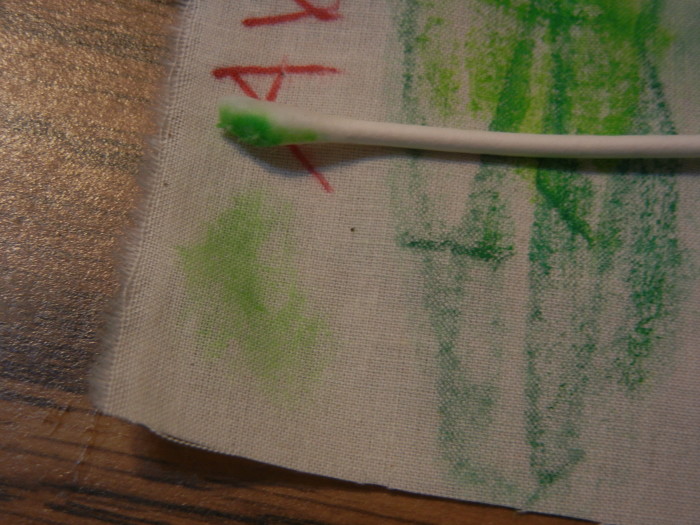
Same thing. I think these are still very viable for use on quilts, but it’s good to know what their properties really are.
What have you experimented with lately?
Ellen Lindner


Hi Ellen,
I have been following your blog for a few years and you inspire me with all that you do, especially your fabric collage work. You are welcome to take a peek at a post I did with Intense and Neocolor II pastels. I also use the Intense blocks and like them very much.
Wishing you continued success in all you do,
LuAnn Kess in Oregon
http://luannkessi.blogspot.com
https://www.pinterest.com/luannkessi/
I use Jacquard colorless extender 100 to wet and seal Inktense. Works well.
Thanks for the suggestion, Jean.
Thanks for sharing what you are doing with Inktense blocks. I want to go find mine and start using them.
Hi Kathy,
They’re fun. Check out the other comments as I’ve received some good suggestions.
I did a similar experiment a few months ago with Inktense coloured pencils, gel textile medium, and water. Gel textile medium and the pencils worked very well together. It was for an art quilt, so I didn’t test the colour fastness of the result after ironing. Details here: http://rhondabracey.com/2015/07/26/watercolour-pencils-and-textile-medium-a-happy-marriage/
This is great information, Rhonda! I hope my readers will check out your post: http://rhondabracey.com/2015/07/26/watercolour-pencils-and-textile-medium-a-happy-marriage/ . Thanks for sharing!